Closing the pigeon gap

Cher Ami, an American veteran of the First World War, was credited with carrying the message that saved 200 men of the “Lost Battalion” during the Battle of the Argonne in 1918–despite losing a leg and an eye to shell splinters in the maelstrom of battle. Decorated with the French Croix de Guerre, he was preserved after death and can still be seen on display in the American Museum of Natural History.

At midnight on November 12, 1870, two French balloons, inflated with highly flammable coal gas and manned by desperate volunteers, took off from a site in Monmartre, the highest point in Paris. The balloons rose from a city besieged—the Franco-Prussian War had left Paris isolated, and the city had been hastily encircled by the Prussian Army—and they did so on an unlikely mission. They carried with them several dozen pigeons, gathered from lofts across the city, that were part of a last-ditch attempt to establish two-way communication between the capital and the French provisional government in Tours, 130 miles southwest.

Paris had been encircled since mid-September. By early autumn, with the prospects of relief as distant as ever, and the population looking hungrily at the animals in the zoo, the besieged French had scoured the city and located seven balloons, one of which, the Neptune, was patched up sufficiently to make it out of the city over the heads of the astounded Prussians. It landed safely behind French lines with 275 pounds of official messages and mail, and before long there were other flights, and the capital’s balloon manufacturers were working flat out on new airships.

The work was dangerous and the flights no less so—2.5 million letters made it out of Paris during the siege, incalculably raising morale, but six balloons were lost to enemy fire and the ones that survived that gauntlet, historian Alastair Horne observes, “were capable of unpredictable motion in all three dimensions, none of which was controllable.”

The French prepare a balloon for launch during the Siege of Paris, 1870. Pigeons carried out by balloon helped establish two-way communication with the city.

Of the two balloons in the pigeon flight, one, the Daugerre, was shot down by ground fire as it drifted south of Paris in the dawn, but the other, the Niepce, survived by hastily jettisoning ballast and soaring out of range. Its precious pigeon cargo would return to the city bearing messages by the thousand, all photographed using the brand-new technique of microfilming and printed on slivers of collodium, each weighing just a hundredth of an ounce. These letters were limited to a maximum of 20 words and they were carried into Paris at a cost of 5 francs each. In this way, Horne notes, a single pigeon could fly in 40,000 dispatches, equivalent to the contents of a substantial book. The messages were then projected by magic lantern onto a wall, transcribed by clerks, and delivered by regular post.

A total of 302 largely untrained pigeons left Paris in the course of the siege, and 57 returned to the city. The remainder fell prey to Prussian rifles, cold, hunger, or the falcons that the besieging Germans hastily introduced to intercept France’s feathered messengers. Still, the general principle that carrier pigeons could make communication possible in the direst of situations was firmly established in 1870, and by 1899, Spain, Russia, Italy, France, Germany, Austria and Romania had established their own pigeon services. The British viewed these developments with some alarm. A call to arms published in the influential journal The Nineteenth Century expressed concern at the development of a worrying divergence in military capability. The Empire, it was suggested, was being rapidly outpaced by foreign military technology.


Continue reading

Murder in the Potala

The Potala Palace, Lhasa: home to nine successive Dalai Lamas, a number of them suspiciously short-lived.

The Potala Palace, Lhasa: home to nine successive Dalai Lamas, a number of them suspiciously short-lived.

Few buildings inspire awe in quite the way that the Potala Palace does. Set high on the great Tibetan plateau, against the looming backdrop of the Himalayas, the vast structure rises 400 feet from a mountain in the middle of Lhasa, taking the uppermost apartments on its thirteenth floor to 12,500 feet above sea level. The palace is at once architecturally striking and historically significant. Until the Chinese occupation of 1951, it was also the winter home of the 14th Dalai Lama, believed to be the reincarnation of a long line of religious leaders dating back to the late fourteenth century.

For Buddhists, the Potala is a holy spot, but even for visitors to the Tibetan capital it is hardly the sort of place one would expect to find steeped in intrigue and corruption. Yet during the first half of the 19th century, the palace was the scene of a grim battle for political supremacy fought between monks, Tibetan nobles and Chinese governors. Most historians of the country, and many Tibetans, believe that the most prominent victims of this struggle were four successive Dalai Lamas, the ninth through the twelfth, all of whom died in unusual circumstances, and not one of whom lived past the age of 21.
Continue reading

On heroic self-sacrifice

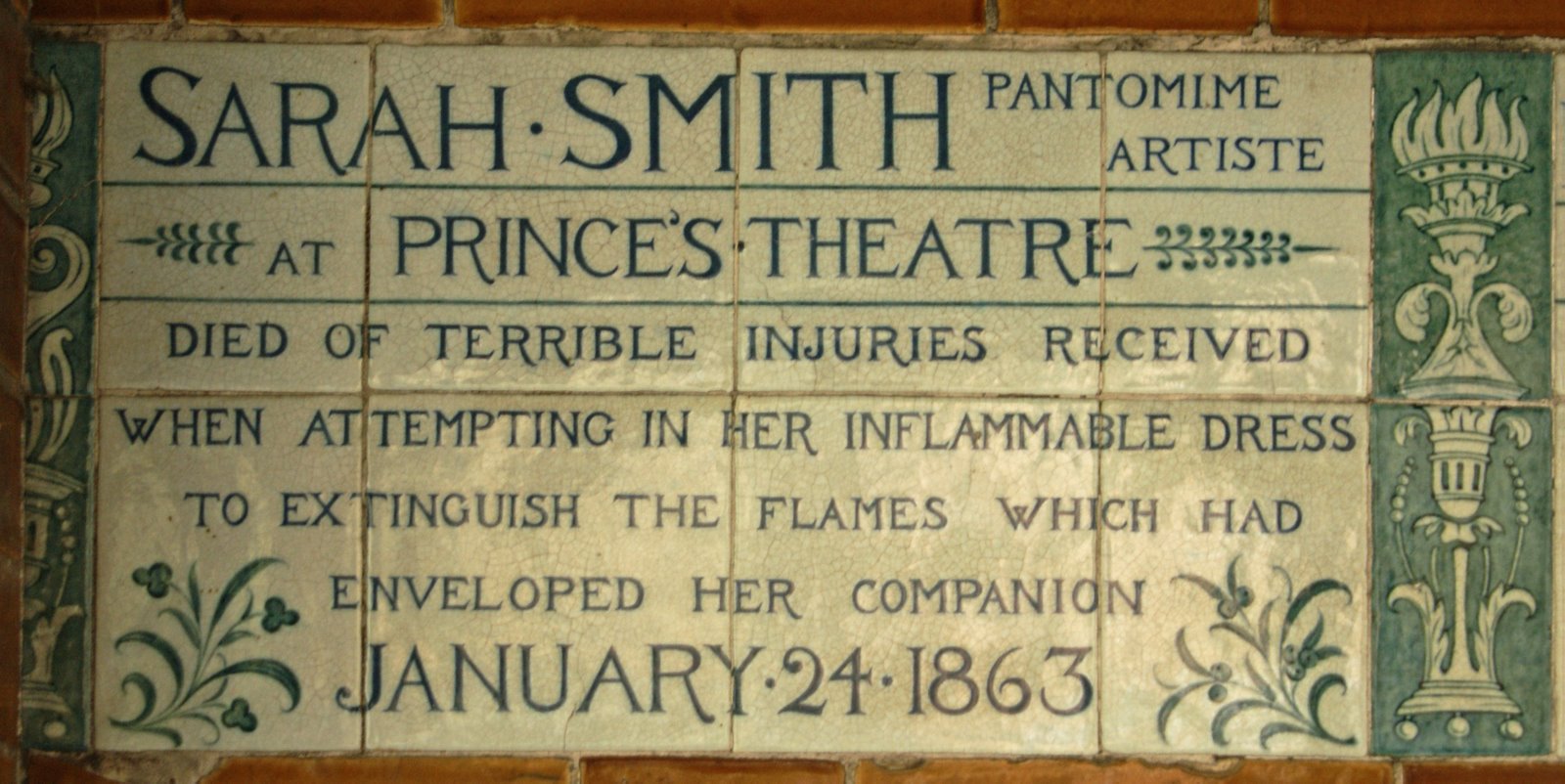
G.F. Watts’s memorial to Sarah Smith, one of several dozen Londoners whose extraordinary Victorian-era deaths are commemorated at Postman’s Park.

No nation is short of monuments to its heroes. From the Lincoln Memorial and Nelson’s Column to the infamous gold-plated statue of Turkmenbashi—which until its recent demolition sat atop a 250-foot-high rotisserie in Turkmenistan and rotated throughout the day to face the sun—statesmen and military leaders can generally depend upon their grateful nations to immortalize them in stone.

Rarer by far are commemorations of everyday heroes, ordinary men and women who one day do something extraordinary, risk all and sometimes lose their lives to save the lives of others. A handful of neglected monuments of this sort exist; of these, few are more modest but more moving than a mostly forgotten little row of ceramic tiles erected in a tiny shard of British greenery known as Postman’s Park.

The park—so named because it once stood in the shadow of London’s long-gone General Post Office building—displays a total of 54 such plaques. They recall acts of individual bravery that date from the early 1860s and are grouped under a plain wooden awning in what is rather grandly known as the Memorial to Heroic Self-Sacrifice. Each commemorates the demise of a would-be rescuer who died in the act of saving someone else’s life.

Continue reading

The Blues versus the Greens: how circus factions nearly brought down the Byzantine Empire

“Bread and circuses,” the poet Juvenal wrote scathingly. “That’s all the common people want.” Food and entertainment. Or to put it another way, basic sustenance and bloodshed, because the most popular entertainments offered by the circuses of Rome were the gladiators and chariot racing, the latter often as deadly as the former. As many as 12 four-horse teams raced one another seven times around the confines of the greatest arenas—the Circus Maximus in Rome was 2,000 feet long, but its track was not more than 150 feet wide—and rules were few, collisions all but inevitable, and hideous injuries to the charioteers extremely commonplace. Ancient inscriptions frequently record the deaths of famous racers in their early 20s, crushed against the stone spina that ran down the center of the race track or dragged behind their horses after their chariots were smashed.

Charioteers, who generally started out as slaves, took these risks because there were fortunes to be won. Successful racers who survived could grow enormously wealthy—another Roman poet, Martial, grumbled in the first century A.D. that it was possible to make as much as 15 bags of gold for winning a single race. Diocles, the most successful charioteer of them all, earned an estimated 36 million sesterces in the course of his glittering career, a sum sufficient to feed the whole city of Rome for a year. Spectators, too, wagered and won substantial sums, enough for the races to be plagued by all manner of dirty tricks; there is evidence that the fans sometimes hurled nail-studded curse tablets onto the track in an attempt to disable their rivals.

In the days of the Roman republic, the races featured four color-themed teams, the Reds, the Whites, the Greens and the Blues, each of which attracted fanatical support. By the sixth century A.D., after the western half of the empire fell, only two of these survived—the Greens had incorporated the Reds, and the Whites had been absorbed into the Blues. But the two remaining teams were wildly popular in the Eastern, or Byzantine, Empire, which had its capital at Constantinople, and their supporters were as passionate as ever—so much so that they were frequently responsible for bloody riots.
Continue reading

Colonel Parker: murderer?

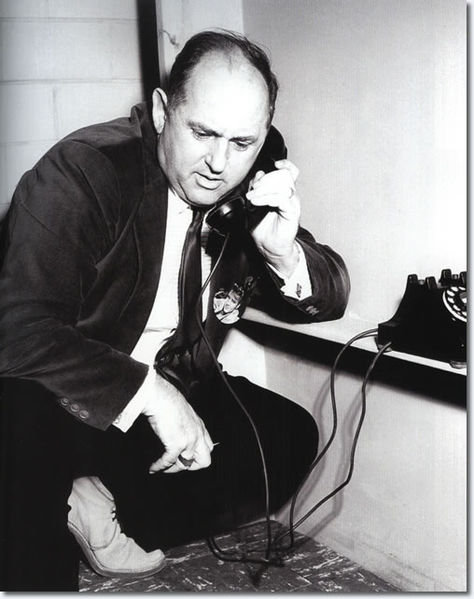
Colonel Tom Parker—the title was awarded to him by Louisiana Governor Jimmie Davis in 1948 for political services rendered—claimed until 1982 to have been born in West Virginia. In fact he was a Dutchman, and the circumstances under which he left the Netherlands in 1929 remain a puzzle to this day.

The Colonel always was a mystery. But that was very much the way he liked it.

It was, of course, a tough trick to pull off, because the Colonel’s name was Tom Parker, and Tom Parker managed Elvis Presley. Since Elvis was the biggest name in the entertainment industry, his manager could hardly help appearing in the spotlight, too. For the most part that was not a problem, because Parker had a showman’s instincts and he enjoyed publicity. But, even so, he was always anxious to ensure that attention never settled for very long on two vexed questions: exactly who he was and precisely where he came from.

So far as the wider world knew, the Colonel was Thomas Andrew Parker, born in Huntingdon, West Virginia, some time shortly after 1900. He had toured with carnivals, worked with elephants and managed a palm-reading booth before finding his feet in the early 1950s as a music promoter. Had anyone taken the trouble to inquire, however, they would have discovered that there was no record of the birth of any Thomas Parker in Huntingdon. They might also have discovered that Tom Parker had never held a U.S. passport—and that while he had served in the U.S. Army, he had done so as a private. Indeed, Parker’s brief military career had ended in ignominy. In 1932, he had gone absent without leave and served several months in military prison for desertion. He was released only after he had suffered what his biographer Alanna Nash terms a “psychotic breakdown.” Diagnosed as a psychopath, he was discharged from the Army. A few years later, when the draft was introduced during the World War II, Parker ate until he weighed more than 300 pounds in a successful bid to have himself declared unfit for further service.

For the most part, these details did not emerge until the 1980s, years after Presley’s death and well into the Colonel’s semi-retirement (he eventually died in 1997). But when they did they seemed to explain why, throughout his life, Parker had taken such enormous care to keep his past hidden—why he had settled a lawsuit with Elvis’ record company when it became clear that he would have to face cross-examination under oath, and why, far from resorting to the sort of tax-avoidance schemes that managers typically offered to their clients, he had always let the IRS calculate his taxes. The lack of a passport might even explain the single greatest mystery of Presley’s career: why the Colonel had turned down dozens of offers, totaling millions of dollars, to have his famous client tour the world. Elvis was just as famous in London, Berlin and Tokyo–yet in a career of almost 30 years, he played a total of only three concerts on foreign soil, in Canada in 1957. Although border-crossing formalities were minimal then, the Colonel did not accompany him.

Parker serving in the U.S. Army, c.1929. Photographer unknown.

Although it took years for the story to leak out, the mystery of the Colonel’s origins had actually been solved as early as the spring of 1960, in the unlikely surrounds of a hairdressers’ salon in the Dutch town of Eindhoven. There a woman by the name of Nel Dankers van Kuijk flicked through a copy of Rosita, a Belgian women’s magazine. It carried a story about Presley’s recent discharge from the U.S. Army, illustrated by a photo of the singer standing in the doorway of a train and waving to his fans. The large figure of Elvis’s manager, standing grinning just behind his charge, made Dankers-van Kuijk jump.

The man had aged and grown grotesquely fat. But she still knew him as her long-lost brother.

Continue reading

The mysterious Mr. Zedzed, the wickedest man in the world

basil zaharoff

Zaharoff promenade.jpg

Zacharias Basileus Zacharoff, better known as Sir Basil Zaharoff: arsonist, bigamist and pimp, arms dealer, honorary knight of the British Empire, confidant of kings, and all-round international man of mystery.

Late in November 1927, an elderly Greek man sat in his mansion in Paris and tended a fire. Every time it flickered and threatened to die, he reached to one side and tossed another bundle of papers or a leather-bound book into the grate. For two days the old man fed the flames, at one point creating such a violent conflagration that his servants worried he would burn the whole house down. By the time he had finished, a vast pile of confidential papers, including 58 years’ worth of diaries that recorded every detail of a most scandalous career, had been turned to ash. Thus the shadowy figure whom the press dubbed “the Mystery Man of Europe” ensured that his long life would remain, for the most part, an impenetrable enigma.

Few men have acquired so evil a reputation as did Basil Zaharoff, alias Count Zacharoff, alias Prince Zacharias Basileus Zacharoff, known to his intimates as “Zedzed.” Born in Anatolia, then part of the Ottoman Empire, perhaps in 1849, Zaharoff was a brothel tout, bigamist and arsonist, a benefactor of great universities and an intimate of royalty who reached his peak of infamy as an international arms dealer—a “merchant of death,” as his many enemies preferred it.

In his prime, Zaharoff was more than a match for the notorious Aleister Crowley in any contest to be dubbed the Wickedest Man in the World. Still remembered as the inventor of the Systeme Zaharoff—a morally bankrupt sales technique that involved a single unscrupulous arms dealer selling to both parties in a conflict he has helped to provoke—he made a fortune working as a super-salesman for Vickers, the greatest of all British private arms firms, whom he served for 30 years as “our General Representative abroad.” He expressed no objection to, and indeed seemed rather to enjoy, being referred to as “the Armaments King.”

Men of the Constantinople Fire Brigade, an Ottoman army unit well-known in the 19th century for its corruption. In the 1860s Zaharoff was employed there as an arsonist, setting fires that could be extinguished for profit.

Zaharoff’s youth remains shrouded in mystery and rumor, much of it put about by Zedzed himself. He was born in the Turkish town of Mughla, the son of a Greek importer of attar of roses, and soon proved to be an astonishing linguist—he would later be described as the master of 10 languages. At some point, it is supposed, the family moved briefly to Odessa, on Russia’s Black Sea coast, where they Russified their name. But remarkably little proper documentation survives from this or any other period of Zaharoff’s career. As one early biographer, the Austrian Robert Neumann, put it:

You ask for his birth certificate. Alas! a fire destroyed the church registers. You search for a document concerning him in the archives of the Vienna War Office. The folder is there, but it is empty; the document has vanished…. He buys a château in France and—how does the story of the editor of the Documents politiques go?—”Sir Basil Zaharoff at once buys up all the picture postcards… which show the château, and strictly prohibits any more photographs being taken.”

Continue reading

The Monster of Glamis

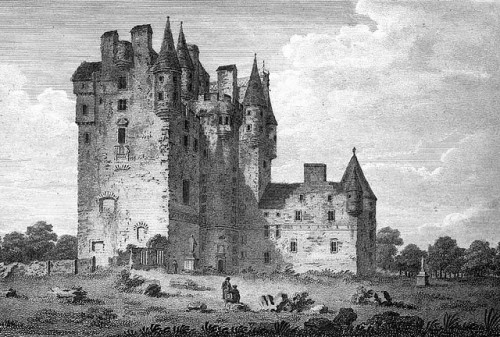
Glamis Castle in the 18th century, shortly before its “mystery” began.

“If you could even guess the nature of this castle’s secret,” said Claude Bowes-Lyon, 13th Earl of Strathmore, “you would get down on your knees and thank God it was not yours.”

That awful secret was once the talk of Europe. From perhaps the 1840s until 1905, the Earl’s ancestral seat at Glamis Castle, in the Scottish lowlands, was home to a “mystery of mysteries”—an enigma that involved a hidden room, a secret passage, solemn initiations, scandal, and shadowy figures glimpsed by night on castle battlements.

The conundrum engaged two generations of high society until, soon after 1900, the secret itself was lost. One version of the story holds that it was so terrible that the 13th Earl’s heir flatly refused to have it revealed to him. Yet the mystery of Glamis (pronounced “Glams”) remains, kept alive by its association with royalty (the heir was grandfather to Elizabeth II) and by the fact that at least some members of the Bowes-Lyon family insisted it was real.

Sir Walter Scott, the popular 19th-century novelist, was the first man to tell of the ‘secret’ of Glamis.

Glamis Castle is mentioned by Shakespeare—Macbeth, that most cursed of characters, was Thane of Glamis—and in 1034 the Scottish King Malcolm II died there, perhaps murdered. But the present castle was constructed only in the 15th century, around a central tower whose walls are, in places, 16 feet thick. Glamis has been the family seat of the Strathmore Earls since then, but by the late 18th century it lay largely empty, its owners preferring to live somewhere less drafty, less isolated and less melancholy.

In their absence, Glamis was left in the care of a factor, or estate manager, and it was to this factor that a young Walter Scott applied in 1790 to spend a night in one of its rooms. Scott became the first of several writers to note the castle’s oppressive atmosphere. “I must own,” he wrote in an account published in 1830, “as I heard door after door shut, after my conductor had retired, I began to consider myself as too far from the living and somewhat too near to the dead.” What was more, the great novelist added, Glamis was said to hide a secret room—a useful addition to any residence in 15th-century Scotland, where violence was seldom far away. Its location was known only to the Earl, his factor and his heir.

In one sense, however, the most interesting thing about Scott’s account is what it doesn’t say. The novelist wrote nothing to suggest that the castle’s hidden chamber had an occupant. Yet, within half a century of his visit, it had begun to be rumored that the room concealed an unknown captive—a prisoner who had been held there all his life.

Continue reading

Nice things to say about Attila the Hun

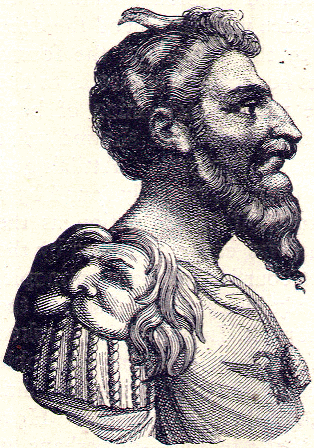
An 1894 engraving of Attila from Horne’s Great Men and Famous Women, adapted from an antique medal. In depicting Attila with horns and goatish physiognomy, the engraver stressed the diabolical aspects of his character.

He called himself flagellum Dei, the scourge of God, and even today, 1,500 years after his blood-drenched death, his name remains a byword for brutality. Ancient artists placed great stress on his inhumanity, depicting him with goatish beard and devil’s horns. Then as now, he seemed the epitome of an Asian steppe nomad: ugly, squat and fearsome, lethal with a bow, interested chiefly in looting and in rape.

His real name was Attila, King of the Huns, and even today the mention of it jangles some atavistic panic bell deep within civilized hearts. For Edward Gibbon—no great admirer of the Roman Empire that the Huns ravaged repeatedly between 434 and 453 A.D.—Attila was a “savage destroyer” of whom it was said that “the grass never grew on the spot where his horse had trod.” For the Roman historian Jordanes, he was “a man born into the world to shake the nations.” As recently as a century ago, when the British wanted to emphasize how barbarous and how un-English their opponents in the First World War had grown—how very far they had fallen short in their sense of honor, justice and fair play—they called the Germans “Huns.” Continue reading

Alone against Antarctica

The last photo of Mawson’s Far Eastern Party, taken when they left the Australasian Antarctic Party’s base camp on November 10, 1912. By January 10, 1913, two of the three men would be dead, and expedition leader Douglas Mawson would find himself exhausted, ill and still more than 160 miles from the nearest human being.

For some it is the wind; for some, the terrible cold. For others, it is the endless, howling blankness of the landscape that drains resolve, or the blinding glare of sun on fresh-laid snow, or the week-long blizzards that pin intruders inside tents that groan under the weight of drifts of snow. Not even the strongest, fittest, hardiest groups– intensively trained, exhaustively equipped and painstakingly acclimatized–can be certain of escaping with their lives from a journey through the hostile wilderness of Antarctica.

Even today, with advanced foods, and radios, and insulated clothing, a journey on foot across these freezing wastes is the harshest of all tests that a human being can be asked to endure. A hundred years ago, it was far, far worse. Then, wool clothing absorbed snow and damp. High energy food came in an unappetizing mix of rendered fats called pemmican. Worst of all, extremes of cold pervaded everything; Apsley Cherry-Garrard, who sailed with Captain Scott’s doomed South Pole expedition of 1910-13, recalled that all his teeth, “the nerves of which had been killed, split to pieces” in temperatures that plunged as low as -77 degrees Fahrenheit.

Cherry-Garrard survived to write an account of his adventures, a book he called The Worst Journey in the World. But even his appalling Antarctic trek–made in total darkness in the depths of the Southern winter–was not quite so horrifying as the desperate journey faced one year later by the Australian explorer Douglas Mawson, an epic that has gone down in the annals of polar exploration as perhaps the most terrible ever undertaken in Antarctica.
Continue reading

The most terrible tunnel

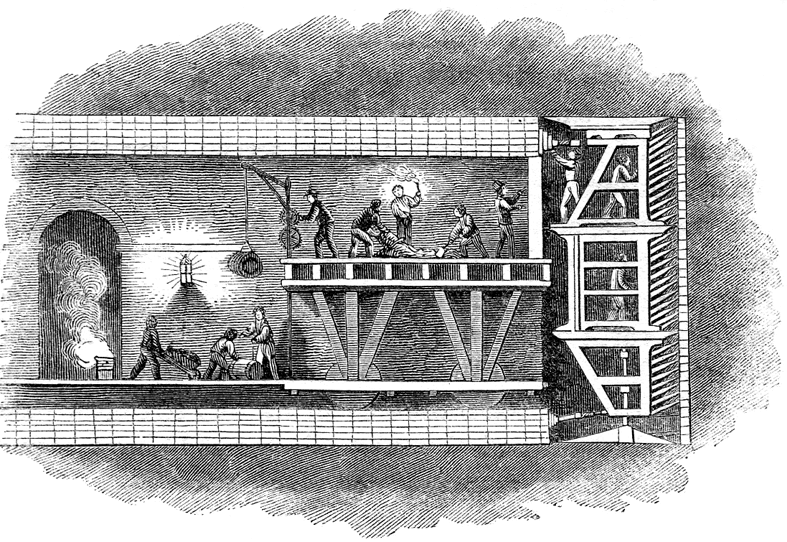
Labourers working at the face of the Thames Tunnel were protected by Marc Brunel’s newly-invented “Shield”; behind them, other gangs hurried to roof the tunnel before the river could burst in. Nineteenth century lithograph.

At the beginning of the 19th century, the port of London was the busiest in the world. Cargoes that had traveled thousands of miles, and survived all the hazards of the sea, piled up on the wharves of Rotherhithe—only for their owners to discover that the slowest, most frustrating portion of their journey often lay ahead of them. Consignments intended for the southern (and most heavily populated) parts of Britain had to be heaved onto creaking ox carts and hauled through the docklands and across London Bridge, which had been built in the 12th century and was as cramped and impractical as its early date implied. By 1820, it had become the center of the world’s largest traffic jam.

It was a situation intolerable to a city with London’s pride, and it was clear that if private enterprise could build another crossing closer to the docks, there would be a tidy profit to be made in tolls. Another bridge was out of the question—it would deny sailing ships access to the deepwater dock known as the Pool of London—and ambitious men turned their thoughts to driving a tunnel beneath the Thames instead.

This was not such an obvious idea as it might appear. Although demand for coal was growing fast as the industrial revolution hit high gear, working methods remained primitive. Tunnels were dug by men wielding picks in sputtering candlelight. No engineers had ever tunneled under a major river, and the Thames was an especially tricky one. To the north, London was built on a solid bed of clay, ideal tunneling material. To the south and east, however, lay deep strata of water-bearing sand and oozing quicksand, all broken up by layers of gravel, silt, petrified trees and the debris of ancient oyster beds. The ground was semi-liquid, and at depth it became highly pressurized, threatening to burst into any construction site. Continue reading