A Scottish spinster at the Battle of Nechtanesmere, 685AD

A Pictish carving which possibly depicts the great battle of 685.

Being an historian, I readily admit to a special fondness for that rarest of Fortean phenomena, the “timeslip” case. These are incidents in which a witness appears to travel back through time, in some unexplained and unexpected way, and is able to witness at first hand an event in the past. The proper name for the phenomenon is retrocognition, and by far the best-known example of it is the celebrated Versailles incident of August 1901, which involved two female English academics on a visit to Paris who took a fork in the path in the grounds of the palace of Versailles and became convinced that they had somehow begun walking through the gardens as they existed in the late eighteenth century, at the time of Marie Antoinette.

In the course of their ‘adventure,’ the women remembered passing several structures which did not exist in 1901, and encountering a number of people, clad in convincing period dress, whom they initially supposed to be actors rehearsing a play. Their story has been the subject of considerable investigation, and though far from all of the results favour the ladies’ interpretation, the incident nonetheless still ranks among a surprisingly large number of researchers’ “classic cases”. There are, however, three or four other, much less celebrated, timeslip cases that follow a very similar pattern, and I want to have a look at one of those today. More

Ghosts, witches, vampires, fairies and the law of murder

Ghost

Thomas Millwood meets his end. From a contemporary book illustration.

Late on the evening of 3 January 1804, a bricklayer by the name of Thomas Millwood left his home in Hammersmith, to the west of London. He was smartly dressed in the sort of clothes favoured by men of his trade: “linen trowsers entirely white, washed very clean, a waistcoat of flannel, apparently new, very white, and an apron, which he wore round him.” Unfortunately for Millwood, though, those clothes proved to be the death of him. At 10.30pm, while he was walking alone down Black-lion-lane, he was confronted and shot dead by a customs officer called Francis Smith – thus setting in motion one of the strangest, best-remembered and most influential cases in British legal history.

The Millwood murder is of interest to us because Smith’s motive for killing him was decidedly peculiar. Hammersmith, then a village on the outskirts of London, had been terrorised for more than a month by reports that some sort of malignant ghost or spirit was haunting the graveyard of St Paul’s chapel-of-ease. Today this cemetery stands in the shadow of the A4 flyover and right next to the busy four-lane Hammersmith roundabout, but 200 years ago it was considerably more isolated. St Paul’s was then still surrounded by fields, and the paths that ran past the graveyard were unpaved and unlit. It’s not difficult to see how, in the depths of winter (the Hammersmith ghost scare ran from December 1803 to January 1804), frightening stories could readily circulate, nor why several local men took it upon themselves to patrol the darkened streets in the hope of encountering and ‘laying’ the ghost. Milwood, in his all-white clothes, had been mistaken for the apparition twice earlier that same day. It was his bad luck that the third time the same mistake was made, the man facing him was not just nervous but armed with a shotgun.

Smith, when he realised his mistake, was horrified. He gave himself up immediately and was swiftly charged with murder and tried at the Old Bailey less than a week later. More

Emily Brontë: a fantasy-prone personality

emily_bronte

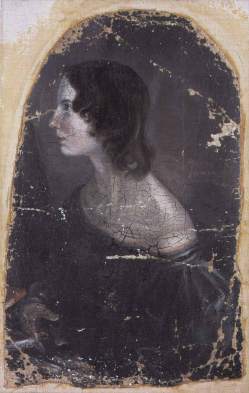
Emily Brontë: a fantasy-prone personality?

More than a quarter of a century has passed since a couple of psychologists named Theodore X. Barber and Sheryl Wilson first published their important study into the central role that a percipient’s fantasy life plays in the nature, frequency and detail of the paranormal claims they make. According to this theory, ‘fantasy-proneness’ (the term Barber and Wilson coined to describe such imagination-driven experiences) directly correlates with – and to a large extent explains – a wide variety of unusual and psychical experiences, including the propensity to see ghosts, hear voices, and undergo close encounters with entities of various exotic varieties.

The critical point, according to Barber and Wilson, is that the ‘fantasy-prone personalities’ they identified were liable to blur the divide between imagination and reality, allowing the former to intrude into the latter in ways that made their imaginary experiences seem quite real. The pair went on to list a total of 14 indicators of fantasy-proneness, and suggested that individuals who experience six or more of these could be labelled “fantasy-prone”. These 14 indicators are: More

The loss of the Saladin and the search for Walter Powell MP

saladin

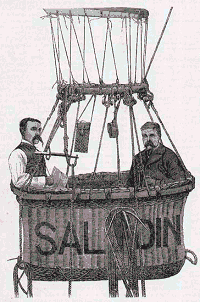
The Saladin balloon, c.1881.

At a time when MPs are in the news, and not often for the right reasons, I want to take a moment to dwell on the more worthwhile, and (from my perspective, anyway) peculiarly illuminating career of a long-forgotten predecessor of the current bunch of petty crooks. His name was Walter Powell (1842-1881) [below right], he was Tory MP for Malmesbury in Wiltshire, and his strange and lonely death offers a good deal of unexpected insight into the perennially fascinating topics of expectant attention and witness perception.

First, a snippet of biography. Walter Powell was the youngest son of a tough and ruthless Welsh mine owner (a tautology, I know) who ran his pits for profit first and safety very much last, emerging during the 1840s as the largest coal exporter in the world. Having driven through a 20% cut in wages and broken the resultant strike, Thomas Powell’s mines were plagued by accidents, culminating in two major explosions at Dyffryn, in Aberdare, and the deaths of more than 80 men. According to Walter Powell’s biographer, the Dyffryn disasters belatedly shamed Thomas senior into repentence for his past behaviour, and inculcated in Walter Powell a determination to use his own inherited wealth more for the public good.

In the late 1860s, Powell moved to Wiltshire, where in 1868 he was selected as Conservative parliamentary candidate for the market town of Malmesbury. Powell won the seat in the subsequent election with a narrow majority of 23, which most likely says something positive about his personality and character, as well as his wealth; the election was a Liberal triumph, and Malmesbury had been a solidly Liberal seat since the 1830s, so Powell’s victory was achieved very much against the prevailing political winds of the day. The evidence suggests he was a good MP and a benefactor to the town; he earned the soubriquet “the poor man’s friend,” and among his achievements was the endowment of a Ragged School there and the supply of 50 tons of coal each winter to Malmesbury’s “aged poor”. More pertinently, from our perspective, Powell was also an enthusiast for all sorts of new inventions. He acquired a magic lantern at around the time just such a contraption was suspected of being used to create the apparitions of the Virgin Mary at Knock, in Ireland, and in 1880, after the death of his wife, he took up ballooning and became very keen on aeronautics.

Ballooning in those days was a preserve of the wealthy. More